


Running ads can be one of the fastest ways to put your brand in front of the right people. There’s clear appeal to ads these days, precise targeting, immediate reach, and measurable results. So organizations invest in campaigns, build out creative, set the budget, and punch the launch button.
Then the traffic arrives. What it finds on the other end of that click matters just as much as everything that drove the click in the first place. That’s where a conversation about your website really begins.
The Whole Funnel Has to Speak the Same Language
Advertising and web strategy can be treated as separate elements. With different teams, different timelines, different goals. But from a user’s perspective, they’re often a continuous experience. Users see the ad, click the ad, end up on a website and then what? The ad sets an expectation. The site either delivers on it or doesn’t. And that handoff, right in the middle of your funnel, is where a lot of otherwise solid marketing efforts fall apart.
When we partner with clients on paid media, we’re not just thinking about the campaign in isolation. We’re thinking about what happens after the click. What does this person need to see, feel, and understand to take the next step? Is the page they’re landing on built to answer those questions? Is the messaging consistent from the ad to the site to the call-to-action?
Traffic to a site is great. We love seeing those sessions tick up but the goal is really what the traffic does when it gets there. Converting website visitors into product users, subscribers, event attendees, clients, or whatever you need them to be that moves the bottom line, and that…that’s what we want to focus on.
What “Not Ready” Actually Looks Like
A website that isn’t ready for ad traffic doesn’t mean it’s ugly or broken, it’s sometimes just not focused on the right things. Here’s what tends to get in the way:
- Big information, small direction. Lots of content, no clear next step. The user reads (or skims), nods along, and then bounces because nobody told them what to do next.
- Messaging mismatch. The ad speaks to a specific pain point or offer, but the page it lands on is too generic. The user has to work to connect the dots and most won’t bother.
- No Clear Value. Within seconds of landing, a visitor should know exactly who you are, what you do, and why it matters to them. If they have to scroll and hunt for that, you’ve already lost most of them.
- A Conversion black hole. Maybe it was built just to look good, or because the design was trendy, or maybe it matched your competition. But unfortunately it’s not true to you, your brand, or your goals.
- Not Measurable. A site that can’t properly track the traffic ads are sending has no way of knowing what’s actually working. Knowing which campaigns drive real results (not just clicks but leads and conversions) requires the right infrastructure in place. That’s honestly a deeper conversation likely worth its own dedicated post, but it starts with a site that’s built to support it.
None of this is a knock on anyone who’s been in this position. Most organizations build their website at one stage of growth and keep running on it even after the goals have shifted. (We’ve been there and we are the branding and marketing agency writing this article!) That doesn’t mean the site failed, it just wasn’t set up to do the marketing job it needs to be doing now.
Meeting You Where You Are
There’s no single right answer for every organization when it comes to web strategy. Some clients need to rebuild a site envisioned from code up around their brand, audience, and goals. Others are in a strong enough position that what they really need is a focused landing page strategy tied to specific campaigns, something built to perform immediately while the longer-term work gets planned.
We don’t come in with a predetermined solution. We come in with a process. We look at where you are, where you’re trying to go, and what’s actually standing between you and getting there. We start with the end goal, those things that will really move the needle and work backward from there to strategize the site and the ads to support those goals. Sending ads somewhere that won’t convert is just pain for everyone.
Now. About That Second Best Time.
If you’re running ads to a site that you know isn’t performing the way it should, you’re not behind, you’re just ready for the next conversation. The work is getting clear on what needs to change and in what order.
It might be the messaging, structure, or simply no way to measure if it’s working or not. It might be that the site and the ads weren’t built to work together from the beginning. Whatever it is, identifying it is the first step, and that’s exactly where we start.
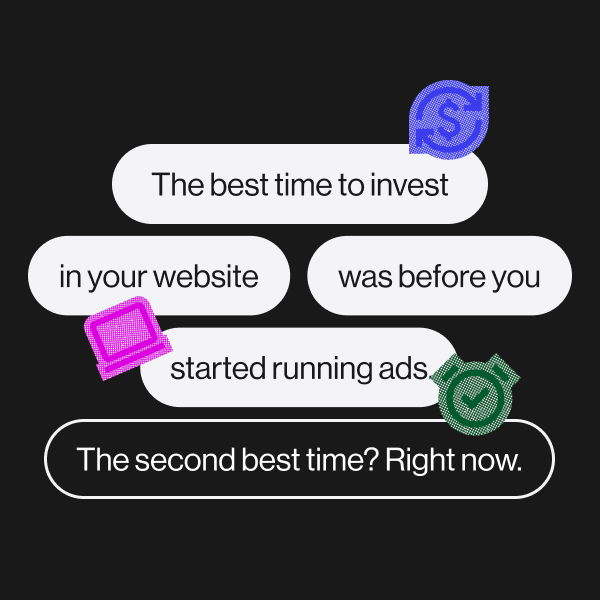
The best time was before you launched those ads. The second best time is before spending more budget on traffic your site doesn’t know what to do anything with.